
The 2026 Flex Office Revolution: A Strategic Analysis of AI Integration, Somatic Design, and the Rise of the Workspace Super-Hub
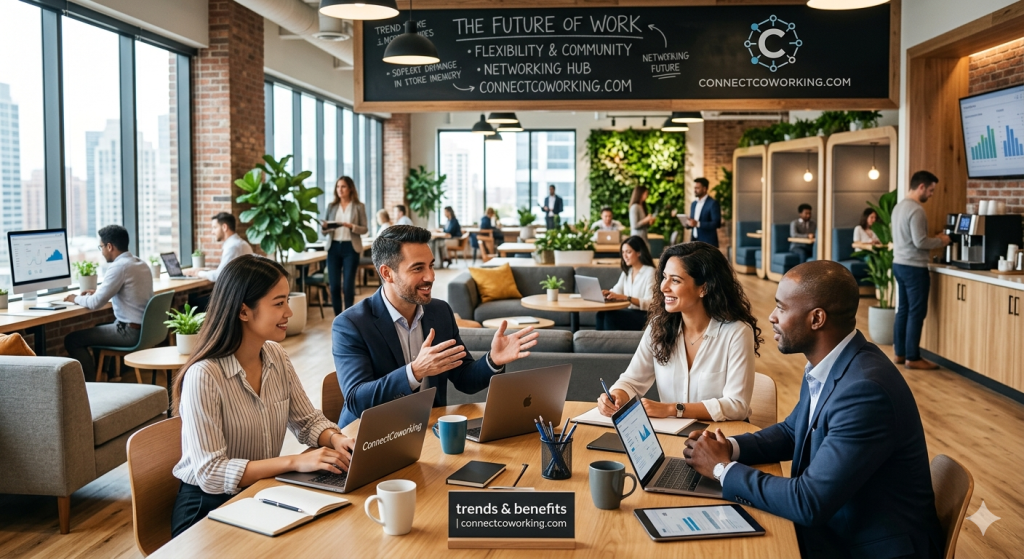
The commercial real estate landscape in 2026 has reached a definitive inflection point, transitioning from a reactive model of post-pandemic stabilization to a proactive era of technological maturity and biological centering. The flexible workspace industry is no longer viewed as a peripheral alternative to traditional office leasing but as the central architecture of the global labor market. This transformation is underpinned by a convergence of three structural forces: the near-universal adoption of generative and predictive artificial intelligence, the elevation of sustainability from a corporate social responsibility goal to a non-negotiable operational baseline, and a profound shift in design philosophy that prioritizes neurological health over mere physical presence. The following analysis explores these dimensions, providing a comprehensive guide for enterprise leaders, facility managers, and modern professionals navigating the complexities of the 2026 workspace ecosystem.
The Macro-Economics of Polarization: Super-Hubs and Hyper-Local Sovereignty
The global coworking market, currently valued at over USD 20 billion and projected to reach USD 58.37 billion by 2033, is undergoing a significant structural realignment characterized by intense polarization. This “great thinning” of the middle ground has created a landscape where two successful models dominate: the enterprise-grade “Super-Hub” and the hyper-local, niche-specific boutique community. Operators that fail to commit to one of these polarities—those providing generic desk space without either the operational scale of a global network or the intimate specialization of a boutique—are facing a “death trap” of invisibility and rising costs.
The Emergence of the Workspace Super-Hub
In 2026, the competitive paradigm of the previous decade has shifted toward synergy and cross-collaboration. Leading operators are moving away from traditional zero-sum competition to build interconnected “Super-Hubs.” This model is exemplified by alliances such as the one between CIC Berlin and MotionLab, where premium office environments are linked with hard-tech maker spaces to create a “cross-contaminated” ecosystem. These hubs provide a comprehensive support layer that goes beyond real estate, offering members “ten reasons to visit” that range from university partnerships and investment access to specialized laboratory facilities.
This shift represents the final transition of coworking from a real estate product to a service-led hospitality industry. The Super-Hub acts as a business development layer, where the operator is not a landlord but a catalyst for growth, connection, and operational efficiency. For large organizations, these hubs provide the infrastructure for a distributed work strategy, allowing them to establish satellite offices in diverse markets without the long-term risk of traditional capital expenditure.
The 15-Minute City and the Return of Neighborhood Hubs
Parallel to the rise of massive Super-Hubs is the resurgence of the neighborhood workspace, driven by the urban planning philosophy of the 15-minute city. As hybrid work matures, professionals are increasingly seeking high-quality work environments within walking distance of their homes. Suburban demand for flexible workspace grew by 25% year-on-year in 2025, a trend that has accelerated in 2026 as organizations seek to reduce “commute-related friction” for their talent. These hyper-local hubs serve as essential infrastructure, often doubling as community anchors that offer childcare, wellness facilities, and cultural programming alongside professional desks.
| Market Segment | Primary Objective | Key Competitive Differentiator | Growth Driver |
|---|---|---|---|
| Enterprise Super-Hub | Global Scalability | Integrated business development layer & tech ecosystem | Fortune 500 decentralization |
| Boutique Niche | Industry Specialization | Intimate community & sector-specific amenities | Professional isolation/loneliness |
| Hyper-Local Hub | Commute Reduction | Proximity to residential neighborhoods (15-min city) | Talent retention & Gen Z preferences |
| The “Squeezed Middle” | Generic Provisioning | Price-based competition (High risk of failure) | Declining traditional office stock |
The AI-Orchestrated Workspace: From Automation to Invisible Concierge
Artificial intelligence in 2026 has transitioned from a series of disparate tools into a unified “invisible concierge” that manages both the physical and digital layers of the workspace. The integration of AI is no longer a marketing gimmick but a fundamental utility that drives operational efficiency and personalized member experiences. Coworking spaces that have successfully integrated AI report operational cost reductions of up to 35%, primarily through the automation of facility management and member services.
The Productivity Paradox and the Human Premium
While 91% of businesses report using AI in some capacity in 2026, a “productivity paradox” has emerged where many firms struggle to see measurable impact on their bottom line. However, the divide between “AI leaders” and “laggards” is widening. Organizations that have deeply integrated AI into their workflows—rather than merely layering it on top of existing processes—see labor productivity grow 4.8 times faster than the global average. These leaders are nearly three times as likely to have increased the number of decisions made without human intervention, allowing staff to focus on the “Human Premium”: judgment, creativity, and empathy.
In the coworking context, AI “boring stuff killers” handle routine administration, booking conflicts, and invoicing. This allows community managers to transition from administrators to relationship architects. AI-powered orchestration engines now forecast attendance and optimize space allocation based on behavioral data, ensuring that “energy-smart” buildings adjust their heating, lighting, and ventilation in real-time to match actual occupancy.
Personalized Environments and Environmental Intelligence
The 2026 workspace is a responsive system that adapts to the physiological and professional needs of the individual. Using IoT sensors and predictive analytics, AI systems learn member habits and preferences. Upon entry, a member’s preferred desk height, ambient temperature, and even lighting spectrum are automatically adjusted to facilitate their specific work mode—whether it be deep focus or collaborative brainstorming.
| AI Technology Category | Implementation | Measurable Impact |
|---|---|---|
| Predictive Analytics | Forecasting meeting room and desk demand | 35% reduction in facility management costs |
| Smart Access Systems | Contactless entry via QR, biometrics, or mobile apps | Enhanced security and frictionless member journey |
| Agentic AI Copilots | Automating scheduling, research, and draft preparation | Reclaiming 2.2 to 5.4% of weekly work hours |
| Sentiment Analysis | Monitoring employee morale and burnout risk | Proactive well-being intervention and talent retention |
Somatic and Bio-Intelligent Design: Engineering the Human Nervous System
One of the most profound shifts in 2026 is the movement away from “mechanical” productivity toward “somatic” and “bio-intelligent” design. This philosophy recognizes that the workplace is a biological environment that either restores or depletes the human nervous system. Primal architecture has emerged as a dominant trend, centering the nervous system in design thinking to reduce the “high alert” states common in traditional office settings.
Primal Architecture and Neuro-Responsiveness
Primal architecture prioritizes psychological safety and physiological regulation. This involves the use of circadian lighting systems that align with the body’s natural rhythms, human-scaled proportions, and the reduction of sensory clutter. In 2026, leading spaces like those within the Connect Coworking network integrate these elements to improve mental clarity and metabolic health. The focus has shifted from mere ergonomics to “neuro-architecture,” where the spatial configuration, acoustics, and materiality are engineered to support emotional balance.
A critical component of this trend is “source control” of indoor pollutants. As buildings became more airtight for energy efficiency, they began trapping microplastics and VOCs from synthetic materials. 2026 design standards now demand natural fibers (wool, cotton, linen) and solid wood or stone finishes to ensure that the air breathed by occupants is clean and supportive of long-term health.
Biophilia and the Return on Wellness Investment
Biophilic design—the integration of natural elements into the built environment—is no longer an aesthetic choice but a high-performance strategy. Research indicates that biophilic office designs can boost focus and creativity by up to 20%. Furthermore, employees in “active design” buildings that feature greenery and natural light report higher energy levels and a greater motivation to work in-person rather than remotely.
The financial justification for these designs is compelling. Organizations that prioritize wellness-focused workplace design see a 21% higher productivity rate and a 6:1 return for every dollar spent on employee well-being. These gains are realized through reduced healthcare costs, lower absenteeism, and significantly higher employee retention.
| Design Element | Physiological Mechanism | Economic/Productivity Outcome |
|---|---|---|
| Circadian Lighting | Regulates sleep-wake cycles and metabolic health | $2,000 annual savings per employee in productivity |
| High-Performance IAQ | Reduces CO2 and pollutant exposure | 44% reduction in absenteeism and 101% boost in cognitive function |
| Biophilic Elements | Reduces cortisol levels and mental fatigue | 15% increase in well-being and 6% boost in concentration |
| Acoustic Pods/Zones | Mitigates sensory overload and “Tech Neck” | Enables “Deep Work” and reduces musculoskeletal disorders |
Sustainability as an Operational Baseline: The Circular Workspace
In 2026, sustainability has moved from being a “nice-to-have” marketing buzzword to a non-negotiable operational standard. As global organizations push toward net-zero goals, they are increasingly selecting coworking providers based on their ESG (Environmental, Social, and Governance) performance. For many companies, utilizing a green-certified flexible workspace is a key component of their “Asset Light” strategy, allowing them to minimize the carbon footprint associated with underused long-term leases.
The Circular Economy in Office Operations
The “Circular Workspace” focuses on regenerating both the planet and the people within it. This includes the use of modular furniture that can be repurposed, the elimination of single-use plastics, and the implementation of zero-waste programs. In Paris, the market is particularly advanced, with operators striving to meet RE2020 regulatory pressures and city-wide goals of 100 hectares of green roofs by 2026. These eco-certified spaces combine environmental performance with productivity, offering energy savings of up to 30%.
Certifications as the New Standard
Certifications such as LEED, BREEAM, HQE, and WELL have become essential for attracting high-value corporate tenants. A LEED Gold-certified office refurbishment can lead to an annual savings of $85,000 per 150 employees due to a 44% reduction in absenteeism. Furthermore, “certified healthy” buildings command rental premiums of 4.4% to 7.7% compared to non-certified buildings in the same micro-markets. For the members of Connect Coworking, these standards are integrated into the “Bio-Dome” and “Zen” models, ensuring that high-tech connectivity does not come at the expense of environmental health.
| Certification | Focus Area | Industry Relevance in 2026 |
|---|---|---|
| WELL | Human health and well-being (Air, Water, Light) | The baseline for “Somatic” and “Bio-Intelligent” spaces |
| BREEAM | Holistic environmental performance and innovation | Highly sought in international markets (UK, France) |
| HQE (France) | 14 targets across waste, acoustics, and comfort | The standard for Parisian environmental excellence |
| LEED Gold/Plat | Energy, water, and building material efficiency | Primary driver for Fortune 500 ESG compliance |
The Enterprise Migration: Flex as a Core Real Estate Strategy
A defining trend of 2026 is the wholesale migration of large-scale enterprises into flexible workspaces. What began as a solution for startups and freelancers has evolved into a core strategy for 68% of organizations with more than 10,000 employees. Large corporations are using flexible space to reduce long-term lease risk, enter new markets faster, and provide a superior employee experience that supports hybrid models.
The Decentralization of the Corporate Headquarters
The traditional centralized corporate headquarters is being replaced by a distributed network of work hubs. This “hub-and-spoke” model allows companies to provide professional environments closer to where their employees live, thereby supporting talent retention and reducing occupancy costs. In markets like Delhi-NCR and Bengaluru, the demand for Grade A flexible office space is driven by Global Capability Centers (GCCs), which now contribute nearly 47% of total gross leasing.
The Asset-Light Advantage
The transition to an “Asset Light” strategy allows firms to turn unused or underutilized office space into revenue while maintaining the agility to scale their teams up or down. Modern flexible suites are replacing traditional leases because they handle the “operational backbone”—everything from secure networking and janitorial services to furniture procurement—allowing the enterprise to focus entirely on its core mission. Connect Coworking supports this through its “Tech Hub” and “Private Atelier” models, which provide move-in-ready, brandable environments for teams of all sizes.
| Strategy Element | Traditional Office Lease | Enterprise Flex (2026) |
|---|---|---|
| Contract Duration | Long-term (5-10 years) | Scalable/Short-term (1 day to 1 year) |
| CapEx | High (Fit-out & furniture) | Zero (Plug-and-play) |
| Operational Burden | Full management (IT, cleaning, supplies) | Managed by operator |
| Agility | Fixed footprint | Hub-and-spoke distributed model |
The Human Element: Belonging, Loneliness, and the Gen Z Factor
As work becomes more digital and asynchronous, the role of the coworking space as a social anchor has become paramount. Hybrid fatigue has reached a limit in 2026, and professionals are increasingly seeking environments that “restore rather than deplete”. The ability of a workspace to cure loneliness is now its biggest asset.
Community as the New Currency
Coworking communities have evolved into support ecosystems offering mentorship, workshops, and emotional support networks. Rituals of “intentional gathering”—such as shared meals and themed workshops—have replaced manufactured “fun” events. For Gen Z, who will represent a major segment of the workforce by 2026, these community-driven features are essential. 60% of Gen Z business owners have already transitioned to coworking because they value freedom, collaboration, and a clear sense of purpose over fixed work culture.
The Feminization of Leadership and Empathy
A new leadership model is emerging within the coworking industry, characterized by empathy and relational intelligence. Women leaders are increasingly shaping the voice and values of the industry, prioritizing the ability to elevate others. This shift towards emotional intelligence makes coworking spaces more effective at building the “The Great Reconnection” that modern professionals crave.
Connect Coworking Global Ecosystem: Regional Insights
Connect Coworking (connectcoworking.com) has strategically expanded its platform to address these global trends while maintaining a deep understanding of local market nuances. Across its global locations, the mission remains consistent: to simplify the search and booking of high-quality, flexible workspaces that foster connection and productivity.
Tokyo, Japan: Zen Gardens and Silent Productivity
In Tokyo, the Connect Coworking “Zen” model addresses the high-density, high-stress environment of the city. The workspace features soundproofed offices and “Focus Pods” designed for deep work and concentration. Amenities include Gigabit fiber internet and a “Tea & Coffee Bar” that promotes mindful productivity, while wellness events help members maintain a healthy work-life balance in a culture often characterized by long hours.
Singapore: The Bio-Dome and 5G Technology
Singapore serves as the testing ground for the most advanced tech-integrated workspaces. The “Bio-Dome” at Connect Coworking Singapore offers private, smart offices equipped with 5G networks and lab access. This model is designed for high-growth tech firms that require the latest infrastructure alongside a community of innovators.
Paris, France: Artistic Elegance and ESG Compliance
Located in the Le Marais district, Connect Coworking Paris blends “classic Parisian elegance with modern functionality”. The space caters to creatives and entrepreneurs with “Chic Private Ateliers” and flexible nomad spaces. In alignment with French environmental standards, the Parisian locations emphasize sustainable specialty coffee, cultural events, and high-speed fiber connectivity.
Tucson, USA: Community Rituals and Member Portraits
The Tucson location (Fifth Avenue & Congress Street) illustrates the “Community-First” approach. Connect Coworking Tucson is home to over 90 different enterprises, ranging from Fortune 500 companies to local startups. A unique feature of this space is the “Community Wall,” which displays polaroids of each member and their role, alongside a monthly calendar of intentional gathering events. The space offers a mix of full-time desks, glass-encased offices, and “break-out spaces” where members can find new scenery or even a place for a nap.
New York and Sydney: Global Connectivity and Views
In Sydney’s Barangaroo and New York’s high-demand hubs, Connect Coworking prioritizes energizing views and seamless professional support. Sydney members benefit from natural light and views of the harbor, while New York members have access to gourmet coffee, 24/7 access, and secure, move-in-ready suites for teams of all sizes.
Operational Support and the Future of Meetings
The demand for high-end, on-demand meeting space has surged in 2026. Professionals require versatile environments that are equipped with state-of-the-art technology for hybrid collaboration. Connect Coworking has standardized its meeting room offerings to ensure consistency across the globe:
- Huddle Rooms: Designed for small teams or one-on-ones, featuring whiteboards and HD displays.
- Conference Rooms: Equipped with video conferencing capabilities and Polycom speakerphones for seamless remote participation.
- Boardrooms: Catering to team offsites and client presentations with large projector screens and available catering services.
| Feature/Service | Connect Coworking Standard | Strategic Benefit |
|---|---|---|
| Connectivity | High-speed Fiber / 5G / Smart Room Credits | Zero latency for global hybrid teams |
| Support | On-site community team & troubleshooting | 100% focus on business, 0% on facility management |
| Amenities | Gourmet/Specialty Coffee, Zen Gardens, Wellness events | Boosts employee mood, creativity, and retention |
| Flexibility | 24/7 Access, Hourly/Daily bookings, Scaleable suites | Adapts to modern non-linear work schedules |
Conclusion: Strategic Imperatives for 2027
As the industry moves toward 2027, the “Future of Work” is no longer a speculative concept but a lived reality. The organizations and individuals that will thrive in this landscape are those that embrace the following imperatives:
- Prioritize the Human Premium: As AI handles routine execution, professionals must double down on judgment and creativity. Workspaces must be selected based on their ability to facilitate this “Deep Thinking” through somatic design and distraction-free zones.
- Embed Wellness in Real Estate: Well-being is no longer a perk; it is a core business strategy. The ROI of bio-intelligent design—measured in 25% lower absenteeism and 21% higher productivity—makes it a primary consideration for any high-performing team.
- Adopt the Circular Mindset: Sustainability is the new benchmark for trust. Both operators and occupants must work together to minimize environmental impact through energy-efficient operations and waste reduction.
- Leverage Local Sovereignty: The rise of hyper-local hubs and the 15-minute city allows for a more humane work-life balance. Enterprises should utilize global platforms like Connect Coworking to empower their talent with local choice while maintaining global standards.
The year 2026 has proven that the workspace is more than just a physical container; it is a complex, data-smart, and biologically-sensitive system designed for human success. By aligning technology with biology and community, the coworking industry is building a future where work is not just productive, but restorative and meaningful.